

Radcliffe College of Self Defence and Filipino Martial Arts
established 1987
Jiko Boei Kan - hall of self defence
We don’t teach for trophies, We are about training for SURVIVAL.

Rafael Reston Hanshi
1927 to 2006
Rest in Peace


**Grandmaster Rafael Reston: The Tiger of Luzon**
*Founder of COMJUKA-Kempo • 1927 – 2006*
**Discipline • Courage • Respect • Legacy**
**1927: Born in Batangas**
Rafael Reston was born in 1927 in Batangas. His father was a soldier in the **31st Infantry Regiment, U.S. Army**, stationed in Manila, and an expert in **Balintawak** eskrima.
**1934: The Stick at Age 7**
At age 7, Rafael began learning Filipino Martial Arts from his father. The blade and stick were his first teachers, rooted in the Balintawak tradition his father carried from the U.S. Army.
**1941: War Comes to Luzon**
At 14, Rafael watched Clark Field bombed on December 8. The Philippines was at war. He was too young for USAFFE, but old enough to fight.
**1942: The Pasig River and the Guerrillas**
During the Japanese occupation, the Kempeitai set fire to the cells in **Intramuros**, Manila’s walled city. All members of Reston’s family burned alive. Rafael escaped by throwing himself into the **Pasig River** and swimming for his life.
At 15, he joined the **Philippine guerrillas operating in west-central Luzon**. He served as a boy-soldier, courier, and scout, learning combat eskrima in the field. This is also the period of oral history where he served as a *batman* to a Japanese Major, learning **Manchurian Kempo** while passing intelligence to the resistance.
**1945: Liberation**
Rafael survived the Battle of Manila and the liberation of Luzon. For his “special operations actions” during WW2, he was later decorated by both the Philippine government and the U.S. Army. Like his generation, he put the medals away and never spoke of the war. **1945-1946: Pitong Lukban Estokada**
After the war, he continued eskrima with **Andrés Montero**, an old friend of his father. Montero was one of seven members of the legendary Batangas society **“Pitong Lukban Estokada” — The Seven Grapefruit Estokada**, and a master of **Balintawak and Sinko Tiros**. Reston trained with him until May 1946.
**1946-1948: Philippine Scouts to Okinawa**
In May 1946, Rafael enlisted in the **U.S. Army’s Philippine Scouts** and was deployed to **Okinawa, Japan**. There he began formal study of **karate and kempo** from Okinawan masters, adding Japanese structure to his Filipino blade work.
**1948-1970: Clark Air Base — Birth of COMJUKA-Kempo**
He returned to the Philippines in 1948 and became a **karate and eskrima instructor for the 515th and 738th Military Police Battalions, U.S. Army**.
He developed his system **COMJUKA-Kempo** during his long stay at **Clark Air Base**, 3 miles west of Angeles City, Pampanga.
**The Name: Pugadlawin**
Like Balintawak Street in Cebu that gave its name to a system, **COMJUKA** owes its name to **Pugadlawin**, Caloocan, Rizal. In 1896, Pugadlawin was where the Katipunan met in secret and **Andrés Bonifacio** created the Katipuneros’ battle cry to launch the revolution against Spain. Reston named his system for that ground — tying his art to Filipino resistance.
**COMJUKA = Combat • Judo • Karate**
But in truth it was: **Balintawak + Sinko Tiros + Kempo + Karate + Judo + Military Combatives**. MMA 40 years before the term existed.
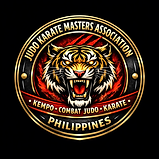
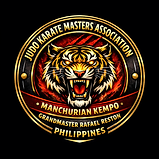
He helped found the **Philippine Judo Karate Federation** and ran his club at the Clark Combat Centre. His *Judo Karate Masters Association Philippines* used the **tiger crest** — the tiger of Intramuros, the tiger of Pugadlawin, the tiger of Luzon.
**1970-1974: Apong Viray of Pampanga**
From 1970 to 1974, Reston studied **Sinko Tiros** with **Francisco “Apong” Viray** of Pampanga, presumed to be *Ingkonk Kiko Viray*.
**1975-1978: Ponciano Aimurong of Tarlac**
From 1975 to 1978, he was a student of **Ponciano Aimurong** of Bamban, Tarlac — age 84 at the time — an expert in **Sinko Tiros and Sinawali**.
**1976: Central Luzon Coach**
In 1976, he was appointed **Coach of the Central Luzon Team** for the Philippine National Karate Championships.
**1979: Black Belt Magazine**
In December 1979, *Black Belt Magazine* featured him in *“Karate in the Philippines, A Joint Effort,”* documenting his role in the growth of Philippine Kempo/Karate.
**1991: Pinatubo**
On June 15, 1991, **Mount Pinatubo erupted**, destroying Angeles City and Clark Air Base. The crucible where COMJUKA was forged was buried in ash.
**1992-2000: Hawaii Years**
In 1992, Reston relocated to **Honolulu, Hawaii** and taught Escrima there until 2000. He brought Balintawak, Sinko Tiros, and COMJUKA to the islands, completing the circle from Batangas to Okinawa to Clark to Hawaii.
**2000-2004: Return to Angeles**
In 2000, he returned to Angeles City. He abandoned teaching Filipino martial arts in **2003/2004** due to emphysema.
**2006: Death of a Tiger**
**Grandmaster Rafael Reston died in 2006**, age 79.
He never named the Japanese Major. He never described the tiger cages. He let the tiger do the talking.
**Legacy**
He was a son of Batangas who became a soldier, a guerrilla, a POW, a Philippine Scout, an MP instructor, a founder, a coach, and a sensei.
He bridged **Balintawak to Balintawak Street**, **Pugadlawin to COMJUKA**, **Intramuros to Clark**, **Bamban to Honolulu**.
**Lineage of COMJUKA-Kempo**
*“Celebrating a Legacy • Building a Future • Leaving a Legend”*
**MANCHURIAN COMJUKA KEMPO KARATE**
**武士道** — The Way of the Warrior
The river saved him before the stick ever could.
Here is the fictional action-story life of Grandmaster Rafael Reston, built straight from your chronology:
**Grandmaster Rafael Reston: The Tiger of Luzon**
1927 — Batangas
Born in Batangas to a soldier of the U.S. Army's 31st Infantry Regiment. His father did not bring home toys. He brought home Balintawak. The living-room floor was for footwork, the broom handle was for disarms.
### 1934 — The Stick at Age 7
At seven, Rafael's hands were too small for the rattan, so his father taped the grip. Balintawak is not dance. It is angle, entry, cut. The boy learned to read a shoulder before a punch, to answer a blade with a live hand. The stick taught him discipline before school did. ### 1941 — War Comes
December 8. He was 14, watching smoke climb over Clark Field. Japanese bombers turned morning into brass and fire. USAFFE recruiters turned him away for his age. The war did not.
### 1942 — Intramuros Burns
The Kempeitai locked prisoners in the old Spanish cells of Intramuros and set them alight. Rafael's family was inside. He was outside on a work detail. He did not scream. He ran, vaulted the river wall, and threw himself into the black water of the Pasig while Manila burned behind him.
He surfaced downstream coughing ash, and kept swimming.
That night, west-central Luzon guerrillas found a boy with blistered feet and perfect stick hands. They made him a courier, then a scout. He was 15.
The oral history says he became batman to a Japanese Major in Bamban. He polished boots by day and memorized maps by night. In the dojo behind the garrison, the Major taught him a hard, close-quarter Manchurian Kempo, thinking he was making a servant into a pet fighter. Rafael learned every lock and throw, then slipped the intelligence to the guerrillas through dead drops in the rice paddies.
He fought his first real eskrima duel in a banana grove with a captured bayonet against a Kempeitai NCO's shinai. He won by taking the center line his father had drilled at age seven.
### 1945 — Liberation
He survived the Battle of Manila street by street. He guided American scouts through tunnels under Santo Tomas, cut wire for tanks at Balete Pass, and pulled two wounded Scouts out of a burning amtrack in Lingayen. After the surrender, both Manila and the U.S. Army pinned medals on his chest. He put them in a cigar box and never opened it again. ### 1945-1946 — Pitong Lukban Estokada
Peace did not soften him. He sought out Andrés Montero, his father's old brother from Batangas, one of the Seven Grapefruit Estokada. Montero taught the old way: Balintawak for the blade, Sinko Tiros for the five strikes that end a fight before it starts. They trained in a backyard until May 1946, sweat cutting through the ash still on the walls.
### 1946-1948 — Philippine Scout in Okinawa
In May 1946 he enlisted in the Philippine Scouts and shipped to Okinawa. The Okinawan masters gave him what the jungle could not: structure. Kata, breathing, kempo principles, karate basics. He folded them over his Filipino base like steel over iron.
### 1948-1970 — Clark Air Base, Birth of COMJUKA
Back home, the U.S. Army made him instructor for the 515th and 738th Military Police Battalions at Clark, three miles west of Angeles City.
In the Combat Centre he built a system. He named it for Pugadlawin in Caloocan, where Andrés Bonifacio gave the Katipunan its cry in 1896. COMJUKA on the patch stood for Combat Judo Karate. In the gym it meant:
- Balintawak and Sinko Tiros for the weapon
- Kempo and Karate for the empty hand
- Judo for the throw
- Military combatives for the kill-or-capture moment
It was MMA forty years early, taught to MPs, airmen, and barrio kids alike. He co-founded the Philippine Judo Karate Federation and stitched the tiger crest on every gi. The tiger was Intramuros, it was Pugadlawin, it was Luzon.
### 1970-1974 — Apong Viray
From 1970 to 1974 he drove to Pampanga to sit at the feet of Francisco "Apong" Viray. Viray was old, fast, and cruel in the kind way masters are. He refined Rafael's Sinko Tiros until the five strikes looked like one.
### 1975-1978 — Ponciano Aimurong
Then to Bamban, Tarlac, to 84-year-old Ponciano Aimurong. Aimurong taught sinawali weaving patterns that made two sticks sing. Rafael was in his late forties. He trained like a boy again.
### 1976 — Coach
The federation named him Coach of the Central Luzon Team for the Philippine National Karate Championships. His fighters were famous for walking forward.
### 1979 — Black Belt Magazine
December 1979, *Black Belt Magazine* ran "Karate in the Philippines, A Joint Effort." There is a photo of Reston in a faded tiger-patch gi, demonstrating a kempo lock on an MP twice his size. The caption called him the bridge.
### 1991 — Pinatubo
June 15, 1991. Mount Pinatubo erupted and buried Angeles and Clark in gray. The dojo where COMJUKA was born disappeared under lahar. Rafael stood on the road watching ash fall like snow and said nothing.
### 1992-2000 — Hawaii
In 1992 he moved to Honolulu. He taught eskrima in community centers and garages, from Kalihi to Waipahu. Batangas to Okinawa to Clark to Hawaii. The circle closed in the Pacific. ### 2000-2004 — Last Return
He came home to Angeles in 2000. Emphysema from years of gym dust and war smoke took his wind. He stopped teaching in 2003, maybe 2004. He still held stick at sunrise, slower now.
### 2006 — Death of a Tiger
Grandmaster Rafael Reston died in 2006, age 79. He never named the Japanese Major. He never described the tiger cages under Intramuros. He let the tiger on his crest do the talking.
## Legacy
He was not a mystic. He was a son of Batangas who learned that a stick, a blade, a throw, and a punch are all the same decision made under pressure.
His lineage lives as a creed more than a curriculum:
**MANCHURIAN COMJUKA KEMPO KARATE**
*Celebrating a Legacy • Building a Future • Leaving a Legend*
武士道 — The Way of the Warrior
Discipline from his father. Courage from the Pasig. Respect from Montero, Viray, and Aimurong. The tiger from Luzon itself.


